
Our Leadership Philosophy
The PALI Ubuntu Leadership Doctrine™
The dominant models of executive education today - transactional, individualistic, and shareholder-centric - have produced efficient managers but have failed to produce humane leaders. The world does not suffer from a scarcity of skilled people; it suffers from a scarcity of leaders grounded in conscience, community, and interdependence.
The Pan-African Leadership Institute (PALI) proposes a different paradigm. Rooted in Africa yet relevant worldwide, Ubuntu Leadership is a distinct epistemology. It is not an addendum to Western models. It is an alternative.
What is Ubuntu?
Ubuntu is drawn from the Nguni Bantu languages - umuntu ngumuntu ngabantu - rendered as “I am because we are” and “I am because you are.” Philosophically grounded by John Mbiti - “I am because we are, and since we are, therefore I am” - and ethically advanced by Desmond Tutu, Ubuntu asserts that personhood is not innate but acquired through relationship. Where Western thought often begins with Cogito, ergo sum - I think, therefore I am - Ubuntu begins with Cognatus, ergo sum - I belong, therefore I am. The leader does not precede community; the leader is constituted by community. At PALI, we define Ubuntu as humanity towards others expressed as authentic service as the primary object of Leadership.
The PALI Four Pillars of Ubuntu Leadership
Pillar 1: COMMUNITY FIRST - The PALI Principle of “No Leader Walks Alone”™
Leadership is not a solitary ascent but a communal emergence. My success is tied to the success of others. This challenges the myth of the heroic, self-made leader. A leader rises by lifting, and falls when disconnected.
Pillar 2: STEWARDSHIP OVER STATUS - The PALI Principle of Service as Object
Ubuntu reframes leadership from status to stewardship. The question is not “What do I gain?” but “What do I steward?”Power is held in trust for those not in the room - future generations, the marginalized, the institution itself.
Pillar 3: HUMANITY IN DECISION - The PALI Principle of the Dignity Test
Every decision is subjected to a human test: Does it preserve dignity? Does it honor our shared humanity? It insists that leaders must be rooted in culture yet not imprisoned by it. Innovation without humanity is efficiency without conscience.
Pillar 4: SHARED NETWORK, SHARED WORTH - The PALI Principle of Collective Custodianship
Relational capital precedes financial capital. Isolated abundance is unsustainable. Ubuntu teaches that worth is measured by contribution to the whole, not accumulation by the few.

Our Symbol - The Siamese-Crocodile
Our philosophical symbol is the Siamese-crocodile, the Adinkra symbol Funtunfunefu-Denkyemfunefu from Ghana.
It depicts two conjoined crocodiles with two heads, two tails, yet sharing one abdomen. Though they may compete, they must cooperate to survive. It is an ancient African articulation of systems thinking, interdependence, and unity in diversity.
It is both a warning and a promise: Institutions, nations, and continents share one stomach. Competition without cooperation is self-destruction.
The PALI Thesis
Ubuntu Leadership is the disciplined practice of merging Africa’s timeless wisdom of interdependence with cutting-edge leadership tools to lead boldly, serve selflessly, and build enduring community.
This is PALI’s distinction. This is the intellectual foundation of all PALI Executive Education and Leadership Development programs. This doctrine informs our 20+ Advanced Leadership Certificates, our blended methodology, and our Lifetime Global Council.
© 2020-2026 Pan-African Leadership Institute (PALI). The PALI Ubuntu Leadership Doctrine™, Funtunfunefu Framework™, and No PALI Leader Walks Alone™ are proprietary trademarks and intellectual property of PALI. First propounded in 2020. To cite this work: Osei-Kusi, K. (2020-2026). The PALI Ubuntu Leadership Doctrine: The Funtunfunefu Framework. Pan-African Leadership Institute.

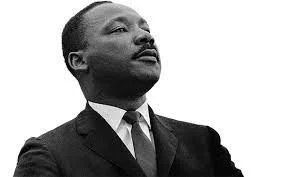
“Whatever affects one directly, affects all indirectly. I can never be what I ought to be until you are what you ought to be. This is the interrelated structure of reality.”
Dr. Martin Luther King, Jnr.